What's the difference between turf and xeriscape?
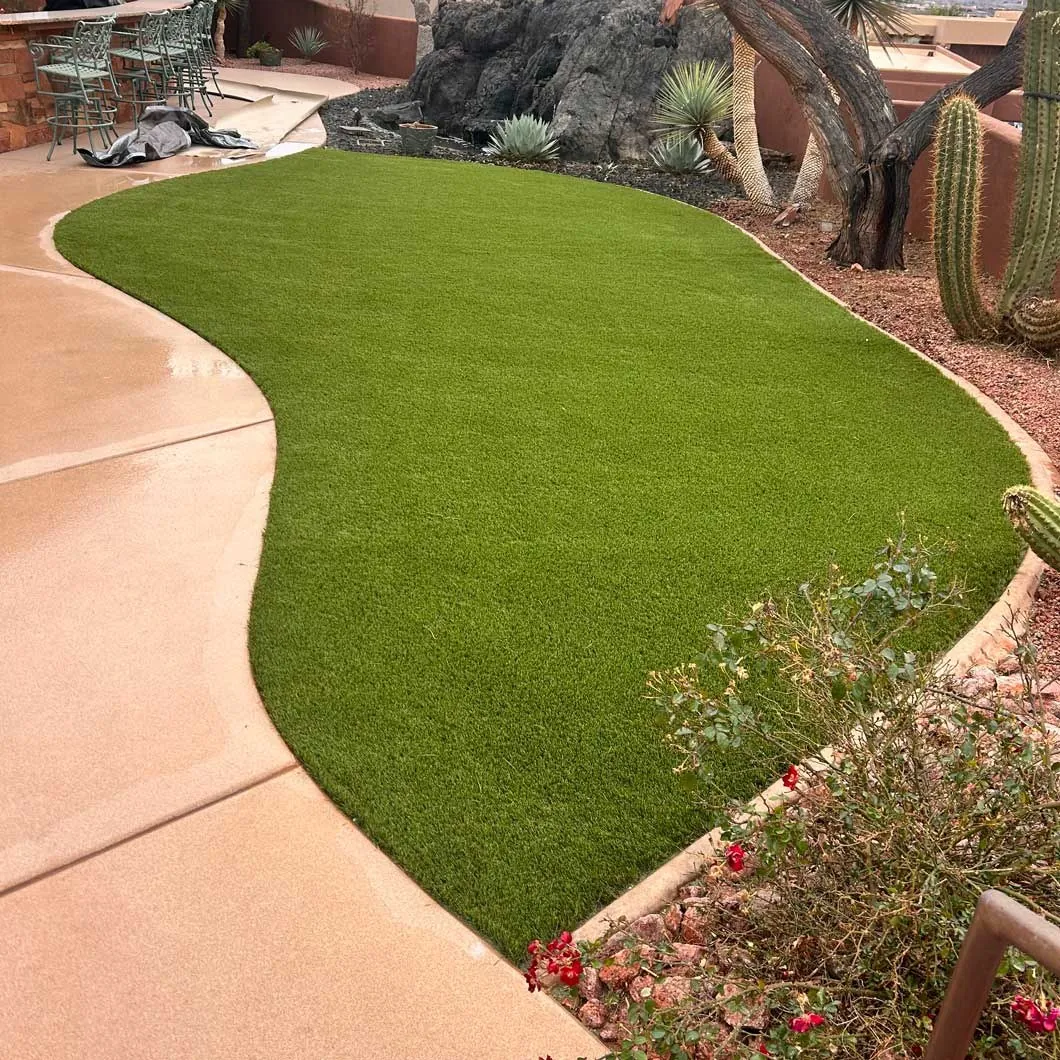
Artificial turf is synthetic grass made to look like natural grass and used in place of a lawn1. Xeriscape, as this guide uses the word, means water-efficient landscaping: trees, shrubs and groundcovers on drip irrigation, with rock or bark mulch between them. That's the kind of yard the water district pays for2, and it's what desert landscaping covers.
Which one can earn a rebate?
Only xeriscape, though turf can ride along. In the district program, permeable turf is accepted in place of mulch only when the converted area also meets the 50% plant cover and drip rules2. In Cedar City and Enoch, the state program excludes artificial turf outright3. Check eligibility with the district before you start; pre-approval is required4.
| Artificial turf | Xeriscape: plants, drip, mulch | |
|---|---|---|
| District rebate | $0 alone; counts only as mulch in a qualifying conversion2 | $2 per sq ft, plus $1 on the first 1,000 sq ft for projects done June 9, 2026 to June 1, 20274 |
| Cedar City and Enoch rebate | Excluded3 | $2.00 per sq ft, up to $50,0003 |
| Published installed cost | $8 to $15 per sq ft5 | $4 to $6 per sq ft, the district's contractor estimate2 |
| Summer surface heat | Generally 35 to 55 degrees hotter than natural grass6 | Rock can run hot; shade can cool an area up to 25 degrees72 |
| Water savings figure | No district figure for turf alone | Up to $300 a year for a typical conversion2 |
| What it's good for | Play areas, dog runs, putting greens | Shade, wildlife, less runoff and erosion2 |
Get an exact price for your project. True Turf calls you back within 30 minutes during business hours.
Call (435) 660-6207Send the formWhich costs less to put in?
Xeriscape, on published numbers. For 1,000 square feet, turf companies' ranges come to about $8,000 to $15,0005, while the district's $4 to $6 per square foot estimate puts a contractor-built conversion near $4,000 to $6,0002. A qualifying conversion can then earn about $3,000 back if it's finished by June 1, 20274. These are rough figures, not quotes.
The district says its incentive typically covers 30 to 50% of a conversion's cost2. True Turf's projects start at $3,000. For more on turf pricing, see what turf costs in St. George.
Which works better for kids and dogs?
Turf, for the spots they really use. Even the district lists functional lawn areas as one of the seven principles of water smart landscaping, and says you don't have to remove all your lawn to take part. Its test for a lawn you don't need: when people walk on it, are they usually pushing a lawn mower2? Turf can cover the spots that pass that test.
Watch the heat. Penn State says synthetic turf generally runs 35 to 55 degrees hotter than natural grass6. For dogs, True Turf's published spec is at least 4 inches of compacted base in pet areas. See pet turf and turf and summer heat.
Which one needs more upkeep?
Both need some. Xeriscape runs on drip, and the district requires a filter and a pressure regulator because drip parts are held together by friction and fail under too much pressure, while small debris clogs emitters2. Plants need care as they grow. Ask True Turf what care their turf needs and what the warranty covers.
Mulch does part of the work. The district says a few inches of mulch usually holds back weeds, and a weed barrier is generally only recommended where weeds are stubborn2.
Can you mix turf and xeriscape?
Yes. A mixed yard puts turf where you play and plants on drip everywhere else. In the district program, that mix can qualify if living plants cover 50% of the converted area at maturity, the plants are on drip, and you grant the conservation easement4. The district's own water efficiency standards also say permeable turf may be considered mulch8.
See the worked example in the rebate guide for how a mixed 1,000 square foot plan adds up.
How we checked this
Rebate rules come from the water district's program page, FAQ and agreement, and from the state program details used in Cedar City and Enoch243. Turf prices come from a published St. George cost guide5, heat figures from Penn State's sports surface research6, and the rock heat note from Clemson Extension7. We checked every source on October 21, 2026. We found no source we could check for turf lifespan or upkeep costs, so this guide doesn't state them.